
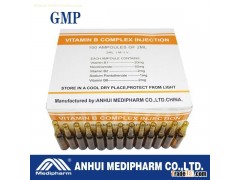

 Click image to view full size image


Each
Vitamin B1 20mg
Nicotinamide 50mg
Vitamin B2: 2mg
Sodium Pantothenate 1mg
Vitamin B6 2mg
CHEIVIISTRY:
Thiiimine Hydrochlori(Jl� is 3 - ((4 - amino - 2 - melhylpyrimidin - 5 - yl) mclhyl j - 5 - ( 2
-hydmjtyethyl ) - 4 - mcthyllhlMZcilium chloride hydrochloride, Ribt)fl:ivin sodium phosphate is the dehydrate of the monosodium salt of 3, 10-dihydro-7,8-dimethy 1-10-[ (2S,3S,4R)-2,3,4-trihy-droxypenty1)]-benzopteridine-2,4-dione
Pyridoxine Hydrochloride is 5-hydroxy-6-methylpyridine-3-4-dimethanol hydrochloride.
Nicotinamide is pyridine-3-carboxamide.
Sodium Pantothenate is calcium Sodium(R)-N-(2,4-dihydroxy-3,3-dimethy1-1-oxobuty1)
-β-alaninate.
INDICATIONS:
Thiamine is an essential coenzyme for-carbohydrate metabolism.Thiamine deficiency
develops when the dietary intake is inadequ�ite; severe deficiency leads to the development of a syndrome, known us beri-beri. Chronic ‘dry’ beri-beri is characterized by peripheral neuritis,bradycardia muscle weakness and paralysis. Acute ' wet‘ beri - beri is characterized by cardiac failure and oedema.DemyeIination of the central nervous system may develop in severe cases of thiamine deficiency.
Riboflavin is essential for the utilisation of energy from food. The iictive Davine mononucleotide and flavine adenine dinucleotide are involved as coenzymes m oxidalive/rcductivc mctabolic reaction.Riboflsivin dcficicncy develops when the dietary intake is inadequate.Deficiency lends (o Ihc development ol' a well - defined syiidromt known as ariboflavinosis, c ha rude ri zed by'cheilosis,angular stomatitis, glossitis ami scborrhocic keratosis of the nose and nnogcnit�il region. There may also be ocular symptoms iiicliuling itching and hurniiig of the eyes,
photophobia and corncal vascularisation.PyridoKine is involved principally in umitio add metabolism,but is also involved in carbohydrate and fat metabolism.lt is also required for the formation of haemoglobin.Pyridoxinc deficiency in adults leads lo the development of peripheral neuritis,deficiency in children also affects the CNS. II is used in the treatment of sideroblastic enemies, in certain metabolic disorders. Nicotinamide and Nicotinic acid occurs naturally iivthc body arc vitamin li subslanccs,which
iire converted to nicotinamide adenine dinucIei)lidc(NAD) :ind nicotinamide adenine
dlnucloctidc phosphate (N A DP).These cwnzymcs arc involved in electron lr;inst'cr read ion in the respiralnry chain.Nicotiiumiitlc ami Nicotinic acid are used in ihc lrc;Umcnl and
prevention of nicotinic acUl deficiency.Its deficiency develops when the dieUiry intake is
inadcqiiate.Deficiency leds to the development of tlic syndrome known as
pellagra,characterized by skin lesion, especially on areas exposed lo sunlight, with
hyperpigmentation and hyperkerdiinisiticin.Other symptoms include diarrhoea,abdominal
pel in, glossitis, stomiitilis, loss of appetite, hcudache, lelhiirgy, tind menial neurologiail
disturbances.
Dexpanthenol is the alcoholic analogue of D-Pantothenic acid and is considered to be a vitamin B substance.It has been used in a variety of conditions including contorl gastrointestinal atony.
CONTIM-INDICATIONS:
It is contra - indicated in haemophiliacs and in patients with ileus due to mechanical
obstruction.
ADVERSE EFFECTS:
Rarely hypersensilivity reactions or allergy and other side effects are associated with long.
term administration of large doses.
ADMINISTRATION:
It may be given by intramuscular or intravenous injection in dose of 2ml or mono daily for
adults. Or in a dose decided by a registered mcdical practitioner only.
AVAILAIULITY:
Ampoules of
Medicines keep out of reach of children
Storage instructions:
Store below 25 degrees celsius. Protect from moisture. Keep out of reach of children.
Validity: Three Years
vitamin b complex injection 2ml
